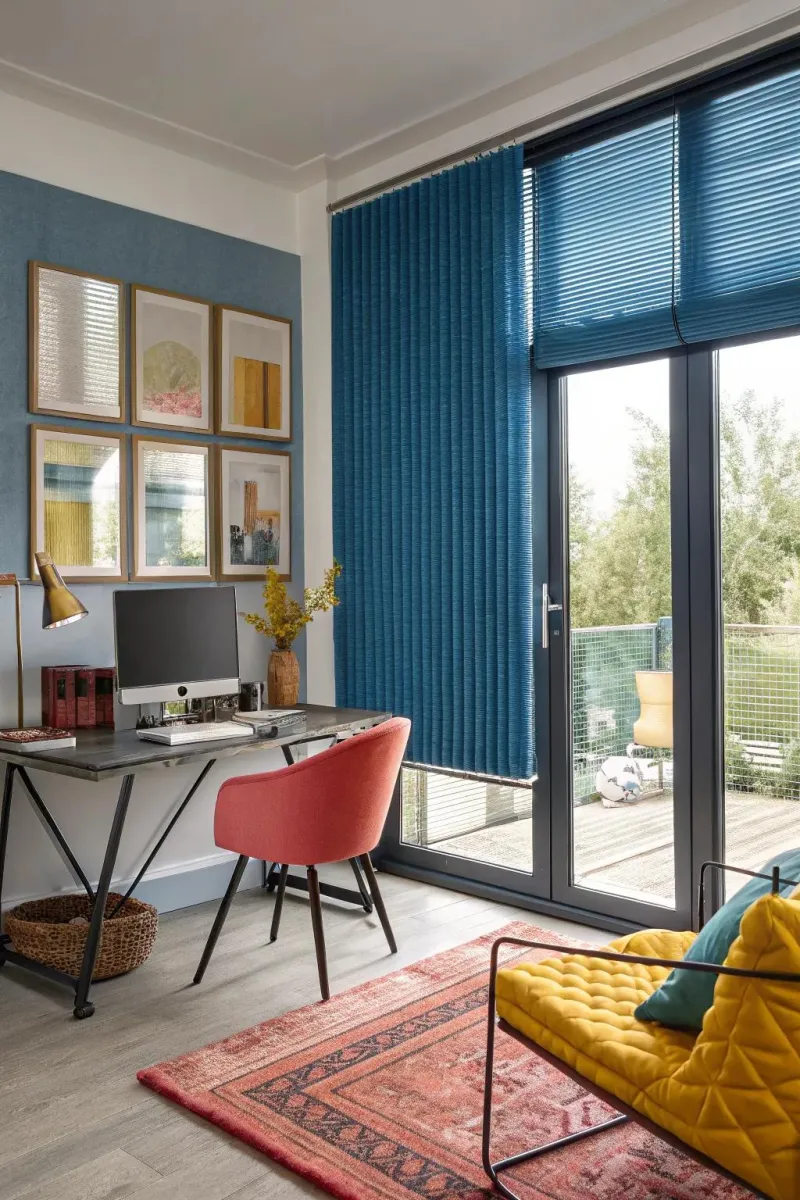
The Fabric Alchemist's Guide: Weaving Colour, Texture and Character into Every Corner

Photo: YSSKACH WFAMOACSH TUNGA, CC BY-SA 4.0, via Wikimedia Commons
There is a moment in every well-designed room when the eye travels comfortably from one element to the next — the curtains echo a cushion, the upholstery picks up a thread in the rug, and nothing feels accidental. Achieving this quiet coherence is one of the most rewarding aspects of interior design, and it begins with fabric.
Start with a Foundation, Not a Palette
Many homeowners begin by choosing a colour scheme, but seasoned designers often work the other way round. Start with a single fabric you genuinely love — perhaps a botanical print for the curtains or a textured linen for the sofa — and allow it to dictate the room's direction. Draw out three colours from that anchor piece: a dominant shade for walls and larger upholstery, a secondary tone for curtains or blinds, and an accent for cushions, trims and smaller details.
This approach, sometimes called the 60-30-10 rule, prevents the common pitfall of a room that feels busy without purpose. A Georgian drawing room in Bath might call for a deep heritage green grounded with warm neutrals, while a coastal cottage in Cornwall may favour faded blues against chalky whites. The principle holds regardless of period or property.
Texture: The Unsung Hero of Coordination
Colour may catch the eye first, but texture is what makes a room feel genuinely inviting. A space dressed entirely in smooth, uniform fabrics can feel flat, however well the colours are matched. Instead, aim for contrast in feel: pair the gentle sheen of a velvet with the nubby character of wool, or the crispness of cotton against the soft drape of a linen blend.
Consider layering in this order:
- Windows — heavier drapes or elegant sheers set the tone
- Seating — upholstery in a durable, tactile weave
- Soft furnishings — cushions and throws in complementary but contrasting textures
- Finishing touches — a runner, seat pads or a fabric-covered lampshade
In older British homes, where walls may be uneven and light can be limited, texture becomes even more valuable. It catches and diffuses light in ways flat colour cannot, lending depth to north-facing rooms and softening the proportions of tall Victorian windows.
Pattern Weight: Balancing Bold and Quiet
Mixing patterns intimidates many people, but the secret lies in pattern weight rather than pattern matching. Think of it as a scale: large-scale florals and striking geometries sit at one end, while subtle stripes, tonal weaves and small repeats sit at the other.
A dependable formula is to combine one large-scale pattern, one medium, and one small. If your curtains carry a generous botanical print, choose a mid-scale check or stripe for cushions, and finish with a finely textured plain weave on the armchair. Varying the scale keeps each fabric distinct, so patterns complement rather than compete.
Scale should also relate to room size. In a compact terrace sitting room, oversized motifs can overwhelm, whereas a grand country kitchen with high ceilings will carry bold patterns beautifully.
Durability for Real Family Life
Beautiful fabrics must also earn their place. For households with children, pets or simply busy schedules, practicality deserves equal weight to aesthetics.
- Sofas and chairs: Look for a Martindale rub count of 25,000 or above for everyday family seating; leather and performance weaves cope admirably with spills and sticky fingers.
- Curtains: Lined curtains hold their shape, resist fading and insulate against British winters — a worthwhile investment in period properties with single glazing.
- Cushions and throws: These can be more delicate; washable cottons and wool blends allow easy refreshing.
- Dining seating: Wipe-clean finishes or treated fabrics simplify life considerably.
Bringing It All Together
The most successful rooms are not those where everything matches, but those where everything belongs. Collect fabric samples and view them together in the actual room, at different times of day, against your existing pieces. Natural light in Britain shifts dramatically between a grey February morning and a June evening, and fabrics will behave differently in each.
Take your time, trust your instincts, and remember that a well-chosen fabric scheme will reward you for years — softening, warming and quietly unifying the home you love.