Seven Surprising Roles for Blinds That Go Far Beyond the Window
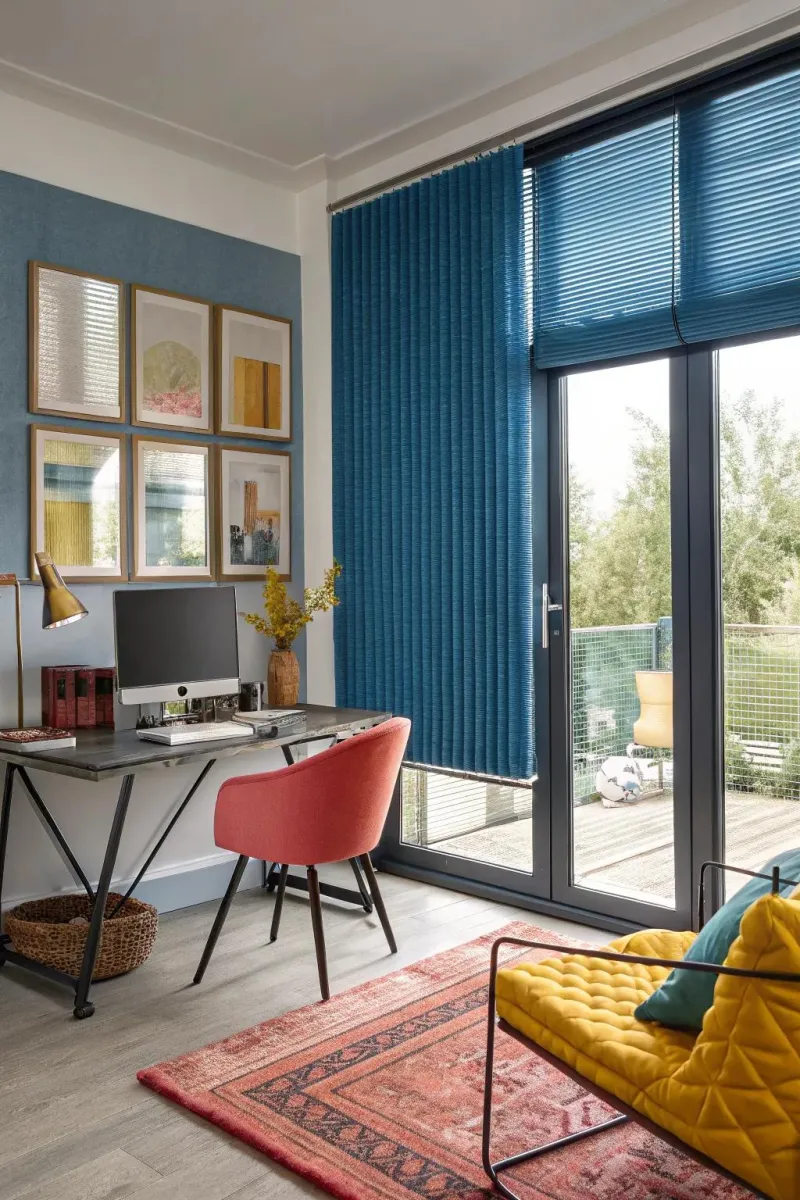
Photo: modern interior blinds room divider home office window treatment, via vervilla.com
Ask most people to picture a blind and they will imagine it hanging neatly at a window — and rightly so. But in the hands of a thoughtful designer, the humble blind is one of the most adaptable elements in the home. Its clean lines, made-to-measure precision and sheer variety of finishes mean it can answer design questions that curtains, doors and screens cannot. Here are seven of our favourite unexpected applications.
1. Room Dividers for Open-Plan Living
Open-plan layouts suit modern life, but there are moments when separation is welcome — a home office that closes at five, or a dining area hidden from the television. A ceiling-mounted roller or panel blind creates an instant, elegant partition without the cost of stud walls.
For Victorian and Edwardian homes where rooms have been knocked through, a textured fabric blind in a neutral weave divides space while preserving light flow. Choose a bottom-up or dual mechanism so you can lower it partially and maintain sightlines when desired.
2. Wardrobe and Closet Doors
Sliding wardrobe doors can dominate a bedroom, particularly in compact new-builds where every centimetre counts. Fitted blinds over open shelving or recessed wardrobes offer a softer alternative — concealing clutter while adding colour and texture.
Roman blinds in a linen-look fabric lend a boutique-hotel feel to a principal bedroom, while sleek blackout rollers work well in children's rooms, doubling as a way to darken sleep spaces when fitted to built-in storage near a window.
3. Statement Wall Features
A floor-to-ceiling blind, drawn fully closed across a feature wall, creates a sculptural panel of colour and texture that changes the entire character of a room. In period properties with awkward alcoves or mismatched plasterwork, a full-width blind offers a flawless finish where redecorating cannot.
Velvet-effect and woven-texture fabrics are particularly effective here. In a Victorian terrace with a bay window, extending the blind across the full recess turns the window treatment into an architectural feature in its own right.
4. Home Office Glare Control with a Twist
Remote work has made the home office a fixture of British life, and blinds are its unsung heroes. But consider going further: fit a blind across open shelving to hide paperwork at the end of the day, or use a slim pleated blind on glass partitions to soften screen glare from adjacent rooms.
Day-and-night (vision) blinds are ideal here, allowing fine control of light without sacrificing the view — invaluable in loft conversions where screens sit near rooflights.
5. Kitchen Cabinet Alternatives
In shaker-style kitchens and cottage properties alike, fabric blinds on open shelves or dresser backs offer a charming, changeable alternative to cabinet doors. A simple café-style blind on a rail can conceal mismatched crockery or recycling bins while introducing pattern into a scheme.
Choose wipeable fabrics or PVC-coated weaves for kitchens, and opt for a spring-loaded or cordless mechanism to keep cords well away from hobs and little hands.
6. Privacy for Glazed Internal Doors
Internal glass doors — increasingly popular in extensions and between hallway and living room — can leave homeowners feeling exposed. A slimline pleated blind fitted directly to the glass provides privacy on demand without altering the door, ideal for listed buildings where permanent changes are restricted.
Perfect-fit and integral blind systems sit neatly between glazing panels with no drilling required, preserving both the door and its warranty.
7. Balcony and Bifold Door Screening
Large expanses of glazing bring light but also heat loss and privacy challenges. Vertical or panel blinds across bifold doors offer flexible screening that retracts neatly when the doors are open — a far more tailored solution than curtains, which can crowd the space.
For modern new-builds with full-height glazing, choose solar-shading fabrics that temper summer glare while retaining the view, and ensure headrails are recessed for a seamless, contemporary finish.
Choosing the Right Mechanism
Whatever the application, the operating mechanism matters as much as the fabric. Cordless and motorised options are safest for family homes and cleanest in appearance; spring-loaded rollers suit narrow spans like cabinets and shelving; and motorised tracks come into their own on wide bifold doors and high-level windows.
Blinds have grown up. Handled with imagination, they are less a window dressing and more a design instrument — precise, practical and surprisingly transformative.