Letting Rooms Look Lovely: A Landlord's Guide to Blinds, Fabrics and the Deposit-Friendly Makeover
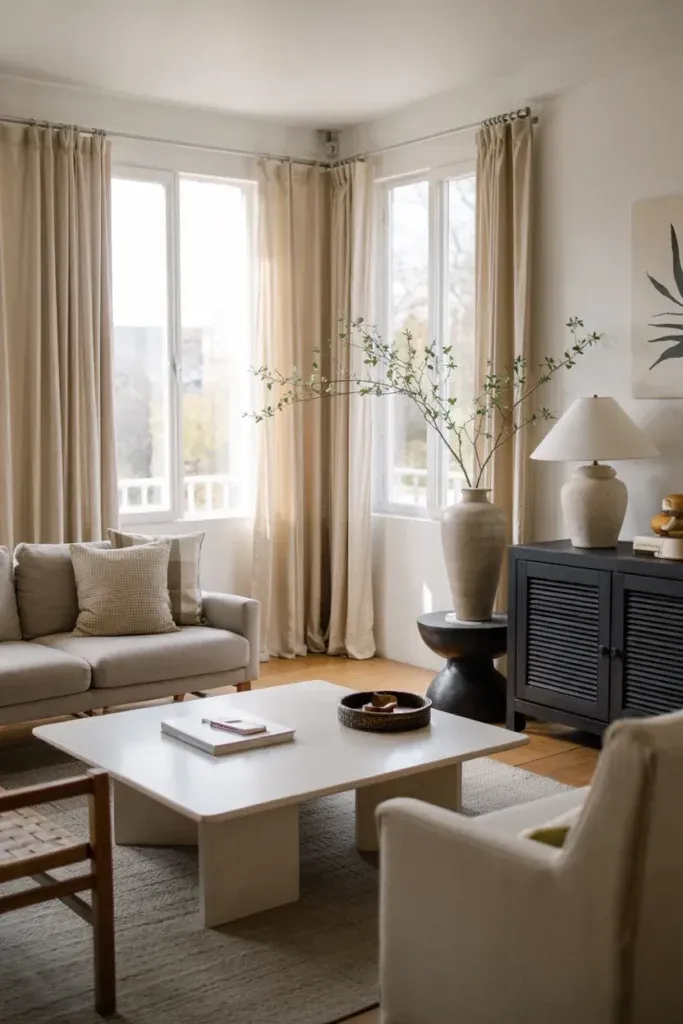
Photo: modern rental apartment living room with roman blinds and neutral curtains, via nestingoak.com
Every landlord faces the same quiet conundrum. The property must photograph well, let quickly, and stand up to a revolving cast of tenants — yet the instinct to bolt on cheap fittings often does more harm than good. Flimsy blinds yellow at the cords, bargain curtains shrink on the first wash, and before long the flat that once looked so promising in the particulars has slipped into a state of benign neglect.
The answer, as any interior designer will tell you, is not to spend more but to spend thoughtfully. Window dressing sits at the heart of this: it is the single most visible element in every room, and — crucially for the rental market — it can be achieved without permanent alteration.
Why the Window Matters More in a Rental
A tenant cannot repaint the walls or replace the kitchen, so the small signs of care carry disproportionate weight. Fresh, well-fitted blinds signal a landlord who takes the property seriously; sagging, sun-bleached curtains suggest the opposite. In a competitive letting market — whether you are marketing a Victorian conversion in Leamington Spa or a new-build flat in Salford Quays — those signals translate directly into fewer void periods and tenants who treat the place with respect.
There is also the matter of the photographs. Rightmove research consistently shows that the majority of prospective tenants form their shortlist from thumbnails alone. A window dressed in a crisp Roman blind, with a strip of daylight falling across a tidy sill, will always out-perform a bent aluminium venetian in the listing lottery.
Blinds That Behave Themselves: Fire Safety and the Law
Before aesthetics, a word on obligation. Since 2014, all window blinds supplied in the UK must comply with child safety regulations — cords and chains must be kept short, secured with cleats or fitted with breakaway connectors. Any responsible supplier will handle this automatically, but a landlord replacing blinds themselves should check.
More significant still is fire safety. In houses in multiple occupation (HMOs) and many student lets, furnishings — including curtains and blinds — are expected to meet Furniture and Furnishings (Fire Safety) Regulations. Choosing inherently flame-retardant fabrics, or fabrics treated to a recognised standard, removes a genuine liability and a source of sleepless nights. Made-to-measure blinds specified through a reputable showroom will come with the relevant certification; it is worth asking for the paperwork and filing it with the tenancy agreements.
No Drills, No Fuss: Renter-Friendly Solutions
For tenants reading this — or landlords who would rather not leave a wall resembling a colander — the modern market offers a pleasing array of non-invasive options:
- Tension rods sit snugly inside the window recess and carry lightweight curtains with ease. Perfect for sash windows in period lets, where drilling into the frame is both unwelcome and possibly a breach of the tenancy.
- No-drill bracket systems hook over the window frame or door, holding a blind securely without a single screw.
- Perfect-fit frames clip directly onto uPVC glazing beads, making them ideal for the ubiquitous modern double-glazed window.
None of these require redecoration on departure, and all of them travel with the tenant to the next property — a small mercy in a transient life.
Hard-Wearing, Handsome Fabrics
Where curtains are called for — a generous bay in a Georgian terrace, say — the choice of cloth matters more than the choice of colour. Look for:
- High rub-count weaves, the same durability measure used for upholstery, which shrug off daily handling.
- Dense cotton and linen blends that hold their shape and launder well.
- Darker mid-tones — sage, slate, warm ochre — which disguise the wear that pale ivory cannot.
Ready-made curtains in a good quality weave, hung from a simple pole, will outlast three rounds of the cheapest alternative. Ready-made curtains are also a landlord's friend in another way: replaceable without commissioning anything bespoke, they keep running costs predictable.
The Return on Investment Question
Is any of this worth the outlay? Consider the arithmetic. A set of quality blinds for a two-bed flat might cost a few hundred pounds more than the budget option. Spread across a tenancy, the difference per month is negligible — yet the impression created at viewing, and the pride a tenant takes in the property, are anything but. Landlords who furnish thoughtfully routinely report longer tenancies and fewer mid-term complaints.
There is, too, the matter of the deposit. Well-chosen, properly fitted window dressings are less likely to be damaged than their flimsy counterparts, which means fewer disputes at check-out and a smoother return of the tenant's money — the true meaning of not breaking the deposit.
A Final Word Before You Order
Measure twice, order once — the oldest advice in the trade remains the best. Recess sizes, obstructions such as window handles, and the direction the glazing faces all influence what will work. A brief consultation with a blinds specialist will save both the cost of returns and the irritation of a blind that fouls on the catch every time it is drawn.
A rental property dressed with care is not a luxury; it is a commercial decision dressed in good taste. Choose blinds and fabrics that meet the regulations, survive the years, and flatter the rooms — and the let will look after itself.