Five Rooms in One: Reinventing a Neutral Living Room Through Fabric Alone
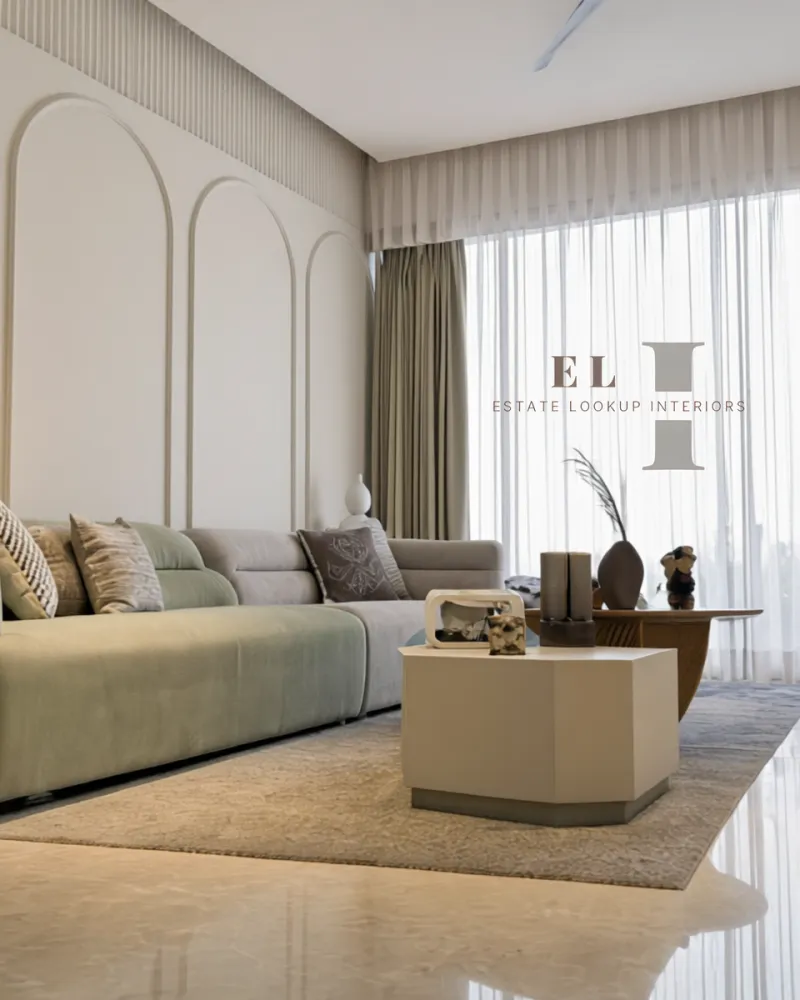
Photo: Estate Lookup Interiors, CC0, via Wikimedia Commons
Consider an ordinary sitting room: white walls, a neutral sofa, a bay window overlooking a modest garden, floorboards beneath a plain rug. It is the starting point for thousands of British homes — inoffensive, unfinished, waiting. What follows is a thought experiment in transformation, achieved without a single tin of paint or plank of joinery. Everything changes through fabric alone.
Look One: Cottage Cosy
The cottage look begins at the window. Swap any existing blind for full-length curtains in a brushed cotton floral — think faded rose or cornflower sprigs on a soft cream ground, hung from a wooden pole so they gather in generous folds. Weight matters here: a mid-weight cotton with a pleasing slump, not a crisp voile.
Layer beneath it. A wool-look tartan throw across the sofa arm, cushions in complementary checks and a quilted footstool in a heritage plaid. The palette stays soft and dusty — sage, rose, oatmeal — and textures do the heavy lifting. A chunky knit or two, a linen lampshade trimmed with ruffle, and the room settles into the kind of comfortable, well-worn charm that no flat-pack showroom can manufacture.
Look Two: Modern Scandi
Strip everything back. The Scandi treatment demands restraint at the window: a flat Roman blind in a pale birch-toned linen or a simple white roller, mounted within the recess so the window frame stands clean and unadorned.
Soft furnishings follow the same discipline. A heavyweight natural linen cushion cover in dove grey, one in oat, perhaps a single accent cushion in muted ochre. The throw is a fine wool blanket in undyed fleece tones, folded precisely over the sofa arm. Texture remains — Scandi style is never sterile — but it is quiet texture: slubbed linen, napped wool, a jute rug replacing whatever came before. Light is the decoration; fabric merely frames it.
Look Three: Classic Heritage
For those whose sympathies lie with the National Trust, the heritage look is an exercise in pattern and propriety. Curtains should be generous — interlined, full-length, breaking slightly at the floor — in a traditional print: a William Morris-style trailing leaf, a damask, or a fine paisley in racing green, madder red or deep navy.
A tailored pelmet or a smart wooden venetian beneath adds architectural weight. On the seating, stripes and florals coexist happily: a pinstripe bolster, a floral scatter cushion, a tartan wool runner draped with intent. Brass tiebacks, a needlepoint footstool, and a deep-pile rug in a Persian tone complete a room that feels as though it has always been thus — in the best possible way.
Look Four: Bold Maximalist
Now for the opposite impulse. Maximalism is not chaos; it is confident curation. Begin with curtains in a large-scale botanical or jewel-toned geometric — emerald, sapphire, fuchsia — and refuse to apologise. Layer a contrasting Roman blind behind them in a complementary pattern; the double-dressing at the window is a maximalist signature.
Cushions should clash on purpose: velvet against embroidered silk, animal print beside abstract, fringing alongside piping. Add a faux-fur throw, a velvet ottoman in a colour the rest of the room has not yet met, and a fringed lampshade for good measure. The rule of thumb: repeat each colour at least twice, vary the scale of every pattern, and commit fully. Hesitation is the only enemy here.
Look Five: Coastal Calm
Finally, the gentlest transformation. Coastal style in Britain owes less to the seaside postcard and more to the estuary: pale, breezy, salt-washed. At the window, airy voile curtains in white or palest aqua, or a simple striped Roman blind in navy and cream ticking stripe.
Soft furnishings stay light — washed linen cushions in shell and driftwood tones, a chunky cotton throw in ecru, a striped runner along the sofa. Natural materials anchor the scheme: a sisal rug, a rattan basket, an unwashed linen lampshade. Nothing should feel heavy. The room should look as though the window has been left open all summer.
The Principle Behind the Trick
What this exercise proves is that fabric is not the finishing touch but the founding decision. The same walls, the same sofa, the same window — five entirely different rooms, each achieved through weight, pattern, palette and layering. When you next feel a room has grown tired, look not to the walls but to the window first. It is remarkable how much of a room's character hangs, quite literally, from a curtain pole.