Small Room, Great Intentions: Rehabilitating the British Box Room

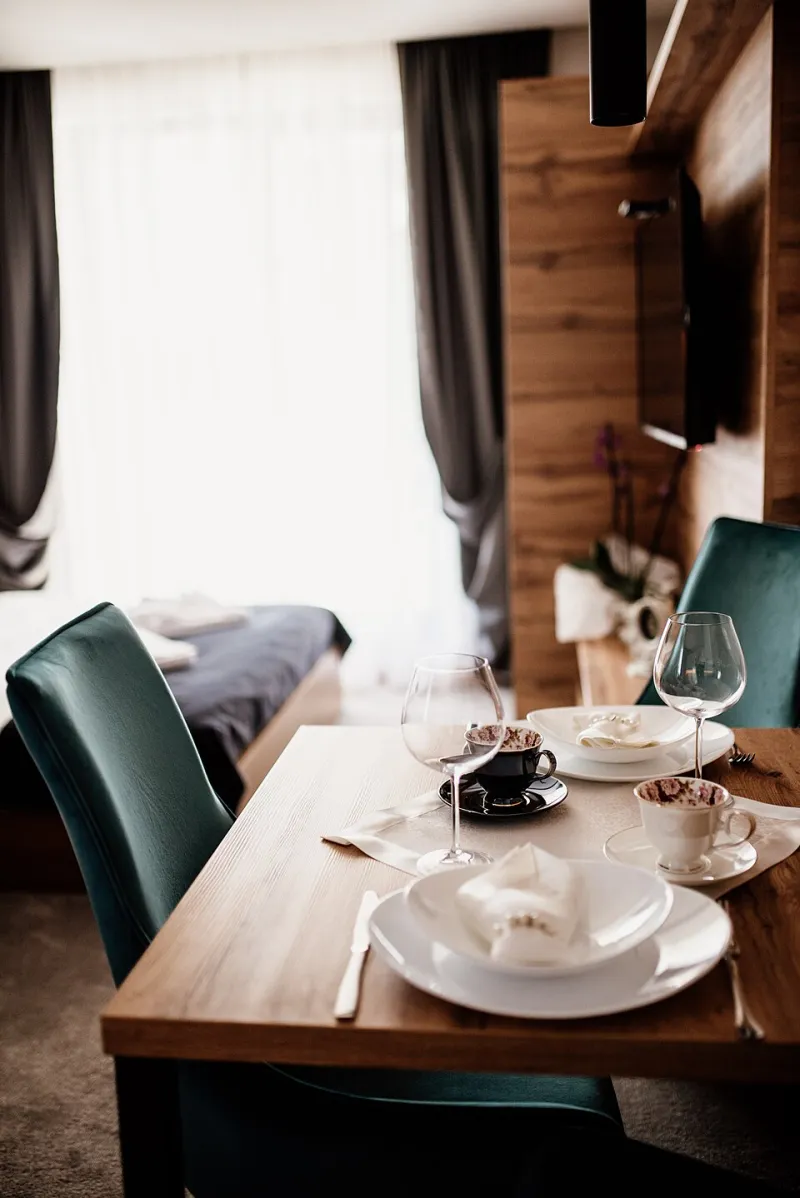
Photo: Shixart1985, CC BY 2.0, via Wikimedia Commons
Every house has one. The room the estate agent optimistically labelled 'study' or 'single bedroom four', and which, within a fortnight of moving in, becomes a graveyard of suitcases, Christmas decorations and exercise equipment that has seen better intentions.
The box room is a peculiarly British institution. In countries where space is generous, such rooms simply don't exist. Here, where Victorian terraces and 1930s semis dominate the housing stock, we've learned to accommodate a room that is often barely larger than the bed it's meant to hold. And so we apologise for it. We close the door on it. We treat it as a cupboard with a window.
We'd like to propose a different approach — one that begins not with furniture or a builder, but with fabric.
The Problem Is Never Really the Size
Ask anyone why their small room fails and they'll blame the dimensions. But a well-considered small room can outshine a sprawling, unfocused large one. What the box room usually lacks is not floor area but conviction. Nobody has ever decided what it is for.
The transformation, then, is less a renovation than a negotiation: one honest conversation about purpose, followed by a handful of deliberate choices. A sewing room. A reading retreat. A guest nest that doesn't feel like an afterthought. Whatever the verdict, fabric is how you announce it.
Start at the Awkward Little Window
Box rooms are blessed — or cursed — with the most eccentric windows in the house. Small sashes set high on the wall. Obscure casements facing the neighbour's downpipe. Openers that don't quite open.
This is precisely where a made-to-measure blind earns its keep. Where a standard curtain would crowd the room and swallow precious wall space, a tailored Roman blind sits snugly within the recess, neat as a shirt cuff. It delivers privacy and light control without a single centimetre of visual clutter.
Choose the fabric boldly. In a small room, a blind is not a backdrop — it's the entire window dressing, compressed into a jewel of a statement. A rich botanical print, a fine stripe, a deep loden green linen: these read as intentional in a compact space in a way that timid neutrals never do. The box room is, counterintuitively, the best-value room in the house for a statement textile, because it needs so little of it.
One Metre of Courage
That points to a broader principle: the small room rewards ambition per metre. A single metre of a spectacular fabric — enough for a pelmet, a lampshade, a table runner or a covered seat pad — costs little and transforms the room's entire register.
Consider the arithmetic. In the sitting room, a sumptuous fabric must cover three metres of curtain to make its point. In the box room, half a metre of the same cloth will do the same work. It is the most efficient room in the house for indulgence.
A few ideas that carry disproportionate weight:
- A lined lampshade in a fabric that echoes the blind, tying the room together at eye level.
- A properly upholstered stool or chair — the difference between furniture that looks placed and furniture that looks abandoned.
- A wall-hung panel or quilted throw treated almost as artwork, bringing pattern to a room short on wall space for pictures.
Light, Layered and Considered
Small rooms live or die by light. Because the box room often borrows its illumination from an awkward angle, layering matters: a blind for privacy and blackout, supplemented by lamps rather than a single ceiling fitting. Warm linens and soft cottons diffuse lamplight beautifully; a glazed chintz will throw gentle reflections around the walls and make the ceiling feel higher than it is.
Resist the temptation to paint everything white and call it solved. White in a small, awkwardly lit room often reads as grey and apologetic. A warm, enveloping scheme — deeper walls, confident fabric, good lamplight — will feel cosier and, paradoxically, larger in spirit.
A Room with a Job
There is a quiet satisfaction in opening the door on a small room that knows exactly what it is. The linens folded, the blind drawn to the precise height that frames the garden, the lamp with its one glorious metre of fabric glowing in the corner. Nothing in it is homeless; everything in it is chosen.
The box room will never be the largest room in the house. With a little conviction — and rather less fabric than you'd think — it can easily be the most charming.