Reversible Refinement: A Tenant's Charter for Beautiful, Deposit-Safe Interiors
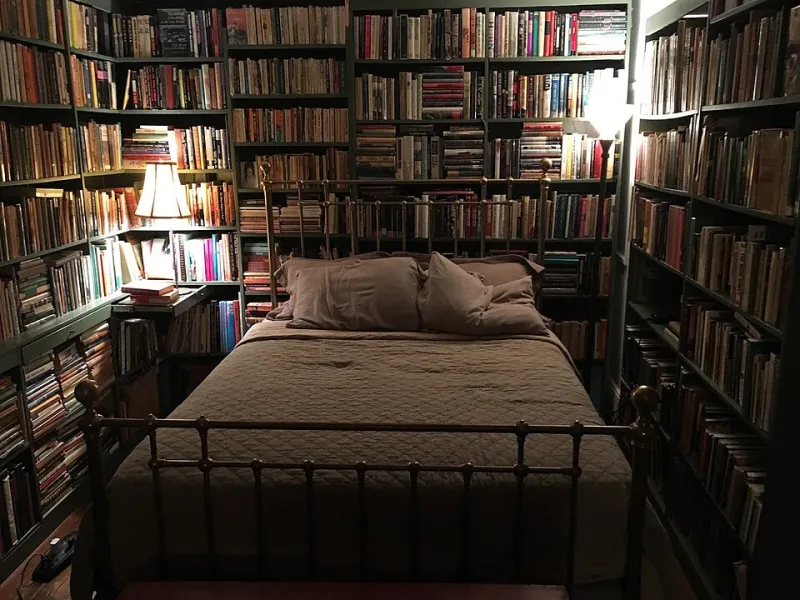
Photo: Bassmon, CC BY-SA 4.0, via Wikimedia Commons
There is a particular melancholy to signing an assured shorthold tenancy and being handed a set of keys alongside a property inventory that reads like a charge sheet. The walls are magnolia — or worse, a shade best described as 'landlord's optimism'. The windows are dressed in vertical blinds that have outlived several governments. And yet the instinct to make a home, rather than merely occupy a flat, is not suspended simply because the freehold belongs to somebody else.
The good news is that the most transformative elements of an interior — fabric, texture, light — are almost entirely reversible. With a little planning, a tenant can achieve the considered, layered look of a well-designed British home while leaving the property precisely as it was found.
Begin with the Inventory, Not the Mood Board
Before any purchases are made, read the tenancy agreement with the attention you might give a contract of employment. Most agreements prohibit marking, drilling or permanent fixings; very few prohibit curtains, freestanding furniture or fabric hung from existing fittings. Photograph every wall and window before you begin. This is not pessimism — it is simply the same documentation discipline you would apply to any valuable project.
It is also worth remembering that a deposit is protected by law under a government-approved scheme, and deductions must be justified. A wall that has never been drilled cannot be charged for. Design accordingly.
Windows Without Wounds
The window is where tenants feel most constrained, and where the greatest opportunities lie.
Tension-pole café curtains are the unsung heroes of the rental world. Spring-loaded poles require no fixings whatsoever and suit sash windows beautifully — a café curtain across the lower half of a kitchen window offers privacy without blocking light, and lends a certain Continental charm that no plastic blind can match.
No-drill roller blinds, designed to sit within the window recess using tension or adhesive brackets that peel away cleanly, have improved enormously in recent years. Choose a quality fabric in a considered colourway and the difference from the standard-issue grey vertical is remarkable. Always test the adhesive on an inconspicuous corner first, and retain the packaging in case removal is required at the end of the tenancy.
Existing curtain tracks and poles are, in most tenancies, yours to dress. Even the humblest aluminium track will carry a lined curtain with grace. A generous pair of curtains in a linen blend, hung high and wide, will soften an entire room — and they travel with you when you move.
Fabric Without Fixings
Where the walls themselves cannot be touched, fabric can still be present.
A picture ledge or freestanding shelving unit against a wall can support stretched fabric panels — lengths of cloth over a simple wooden frame, leaned rather than fixed. This is a technique borrowed from theatrical set dressing, and it works: a bold print or a deep velvet panel introduces colour and absorbs sound in a way painted magnolia never will.
Large-scale textiles have further uses still. A generous throw over a tired sofa, a table runner on a scuffed dining table, a fabric-backed screen dividing an open-plan space — each is a design decision that costs nothing at the end of the tenancy and travels with you to the next address.
Talking to Your Landlord
There is a conversation worth having early, and it is this: would you consider contributing to made-to-measure blinds?
Landlords are, on the whole, not enemies of improvement. A well-fitted Roman blind in a neutral fabric increases the lettable appeal of their property, and many will happily split the cost — or at least grant written permission for professional installation. Approach it as a proposal, not a request: explain the improvement, note that it adds value, and offer to leave the blinds in situ at the end of the tenancy. A polite email creates a paper trail that protects everyone.
If permission is granted, made-to-measure blinds fitted by professionals will leave the smallest possible footprint — often nothing more than four discreet screw holes in a recess, easily filled and touched up.
A Room-by-Room Reversible Checklist
Hallway: A washable runner over the existing carpet; a fabric-lined basket for shoes and post.
Living room: Curtains on the existing track; a large rug to define the seating area and spare the carpet beneath; slip covers in a hard-wearing weave.
Bedroom: Blackout curtains hung from a tension rod or existing pole; a padded headboard that stands freestanding behind the bed.
Kitchen: Café curtains on tension poles; fabric-lined shelves dressed with objects rather than fixed décor.
Bathroom: A quality fabric shower curtain in place of a tired plastic one; a wooden bath mat over the lino.
Leave It Better, Take It With You
The final principle is one of quiet stewardship. Fill any holes properly, steam-clean what needs steaming, and photograph everything again on departure. The measure of a successful tenant-designed interior is not merely that it looked beautiful while you lived there — it is that the next occupant, and the landlord's inventory clerk, will find no trace of it.
Renting is not a suspension of taste. It is simply a brief in which every design decision must be intelligent, reversible and, ideally, portable. Fabric, fortunately, is all three.