A Room of Their Own: Turning the Spare Bedroom into the Best-Lit Invitation You'll Ever Send
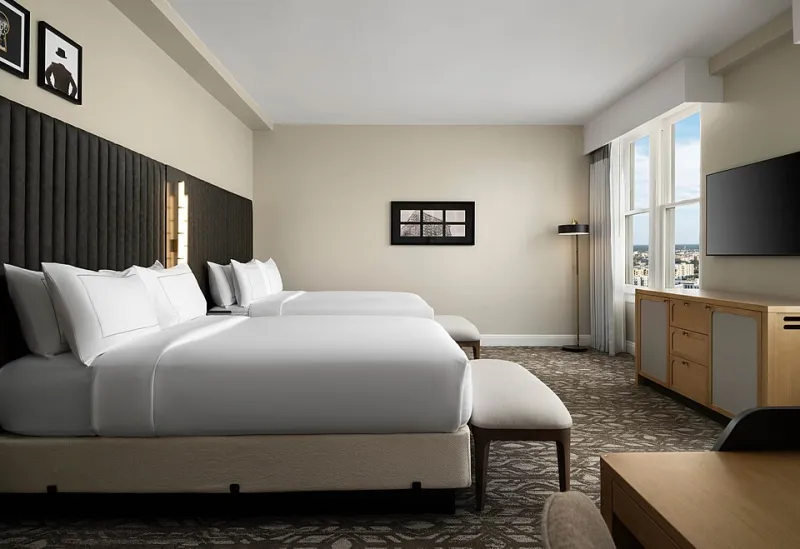
Photo: Evolve&Co, CC BY-SA 4.0, via Wikimedia Commons
Every British home has one: the room that functions as a filing cabinet with a bed in it. The spare bedroom — part laundry overflow, part guilt repository for exercise equipment — is, for most of the year, the least visited square footage in the house. Then the in-laws announce a visit, or old friends propose a weekend, and suddenly you're flinging a decade of clutter into the wardrobe and praying the radiator works.
It needn't be thus. A guest room, properly dressed, is one of the most rewarding projects a homeowner can undertake — small in scope, generous in impact, and genuinely appreciated by the people who sleep in it. Better still, it is a room where fabric and window dressing do almost all of the work.
Begin at the Window, Where Sleep Is Won or Lost
If you ask a guest what makes a good night's sleep away from home, they rarely mention thread count first. They mention darkness. British summer mornings can break before five o'clock, and a street lamp or early sun streaming through a thin curtain is the fastest way to an unhappy visitor.
A made-to-measure blackout blind is the single most transformative purchase you can make in a spare room. Fitted closely to the recess, a quality blind eliminates the halo of light that leaks around conventional curtains, and it does so without overwhelming a modest room. For period properties with sash windows, a discreet roller or Roman blind in a plain linen-look fabric respects the joinery while doing the serious work of darkness.
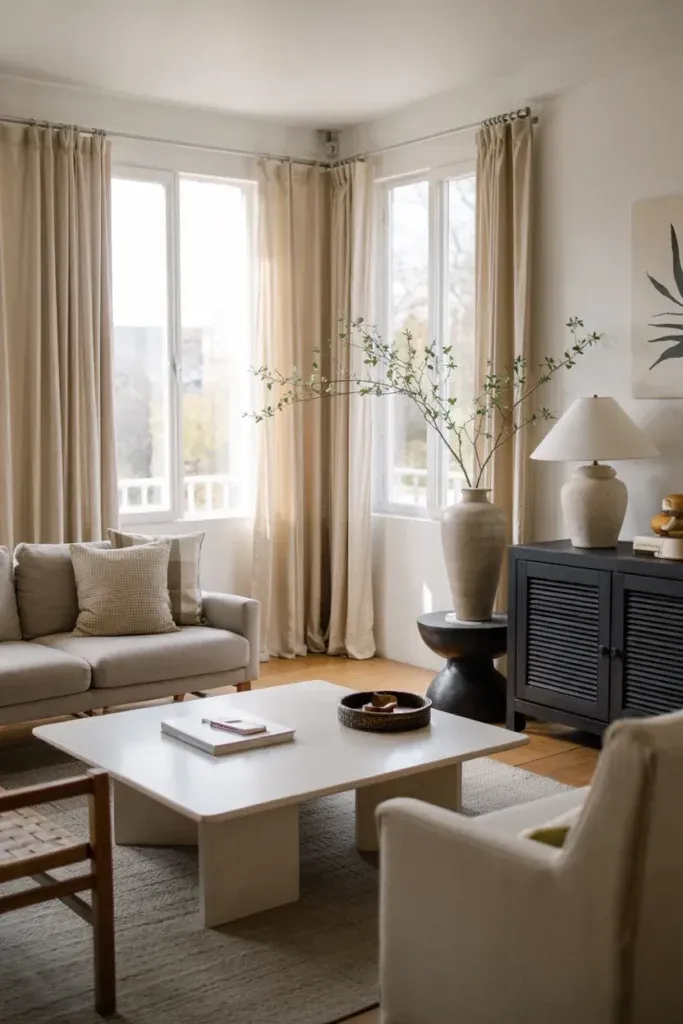
Those who prefer a softer finish might combine the two: a blackout blind for function, a pair of lightweight curtains on a slim pole for warmth and texture. The layering also gives guests a choice — full darkness for lie-ins, filtered light for gentle waking.
The Bed as the Centrepiece
With the window sorted, attention turns to the bed itself — and here restraint is the mark of good taste. A crisp white base layer of percale cotton reads as hotel-luxurious and, crucially, washes beautifully between visits. Over it, add one considered layer of personality: a quilted throw in a muted botanical print, or a wool blanket in a colour drawn from the blind itself.
This is where a touch of design thinking pays dividends. Choose your blind fabric first, then echo one of its tones in the throw or cushions. A sage-green Roman blind with a matching piped cushion is more sophisticated than a themed riot of coordinates, and it costs less. Four cushions maximum. Guests must move them to sleep; every cushion beyond four is a passive-aggressive gesture.
Small Fabrics, Large Gestures
The details that make a guest feel genuinely considered are all textile-based and all inexpensive:
- A folded blanket at the foot of the bed — British guest rooms can be cold in shoulder seasons, and nobody likes asking for another duvet at midnight.
- A runner or small rug beside the bed — bare floorboards at 6am in December are memorable for the wrong reasons.
- A lined curtain or blind at the wardrobe — if the room lacks built-in storage, a simple curtain across an open rail looks infinitely better than a rail alone.
- Fresh linen-scent in the ironing of pillowcases — the cheapest luxury of all.
Light, Layered and Flexible
Guests use a room differently from its owners. They read later, rise later, and rummage for phone chargers in the dark. Bedside lighting with its own switch — not an overhead fixture operated from the doorway — is a courtesy that costs a rewire of nothing more than a plug-in lamp. If the room doubles as a study between visits, a blind that can sit half-lowered during the day keeps the space working quietly in the background.
A Room That Reflects Well on Its Host
There is a quiet pride in watching a guest close a well-fitted blind, switch off the bedside lamp and settle into a bed you dressed with intention. The spare room is, in the end, an advertisement for the rest of your home — the one room your visitors inhabit fully, alone, with time to notice the details.
Dress the window properly, layer the bed thoughtfully, and keep the palette calm. Your guests will sleep well. Some of them, alas, may never leave.